
Safety and source review
Identify immediate hazards, whether the water source has stopped, and whether the area is safe to enter. Plumbing or building repair may be needed before drying can proceed.
Water-damage restoration
A useful restoration plan follows water through the materials it touched—then removes bulk water, manages evaporation, and checks the drying path.
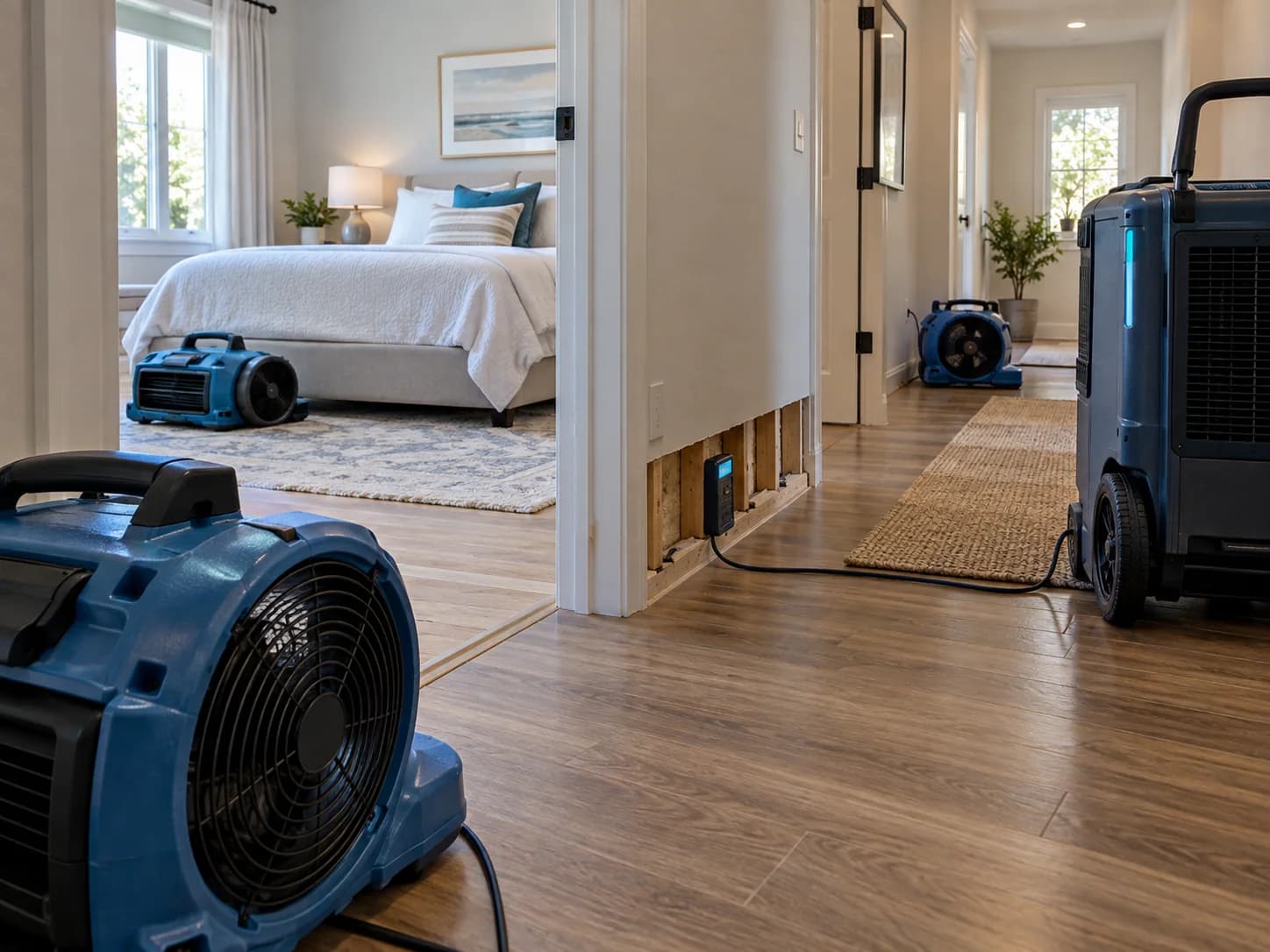 Illustrative service image
The restoration sequence
The visible area does not always define the affected area. A practical workflow begins with what happened and what got wet, then matches extraction and drying methods to the materials involved.
This site does not claim that every material can be saved. Conditions on site determine whether drying, cleaning, removal, or another trade is appropriate.
Identify immediate hazards, whether the water source has stopped, and whether the area is safe to enter. Plumbing or building repair may be needed before drying can proceed.
Review visible damage and likely water pathways through flooring, baseboards, drywall, cabinets, and adjoining rooms.
Remove accessible standing water so remaining moisture can be addressed more efficiently. Extraction does not by itself mean a structure is dry.
Use airflow and dehumidification as conditions warrant, with placement adapted to the affected materials and layout.
Use follow-up measurements to guide equipment changes and determine when the drying phase can be evaluated for completion.
Clear scope
Ask by phone if your situation involves work outside the core scope shown here.
Start with what you know