

01
Extract, then dry with a plan.
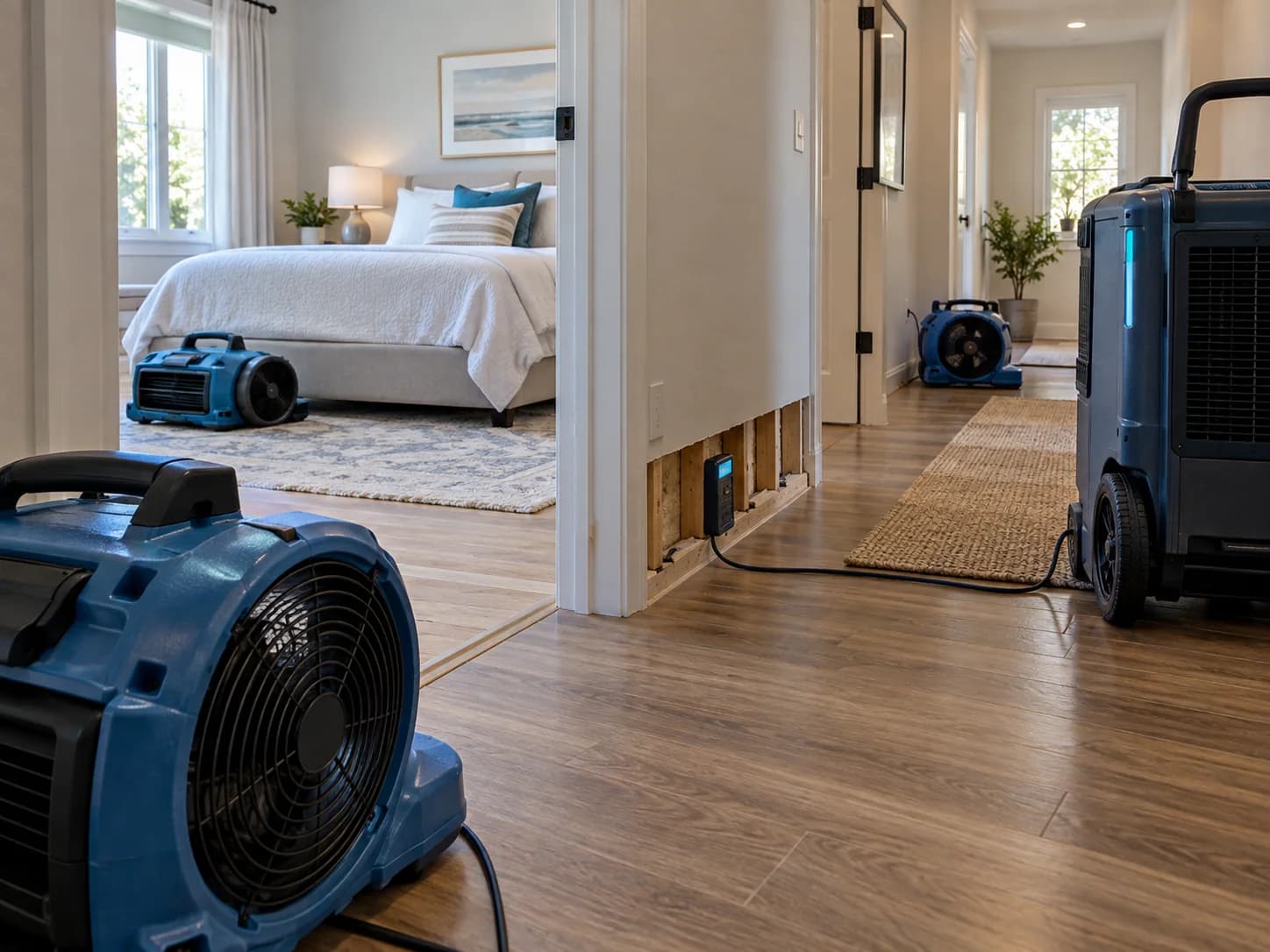
Equipment placement should respond to the affected materials and moisture pattern—not simply fill a room with fans.
When water moves through floors, walls, or cabinets, the next useful step is a clear assessment—not guesswork. Call now or send the essentials so the affected area can be discussed.
Focused restoration
Visible water is only the first layer. Flooring, drywall, cabinets, and cavities can hold moisture after the surface looks dry. The response should follow the path of the water, then use extraction, airflow, and dehumidification where appropriate.
Explore water-damage restorationAssessment helps distinguish a surface spill from moisture that has moved under flooring or behind finishes.
Drying decisions should be based on measured conditions, not appearance alone.
Service photography on this website is AI-generated and illustrative. It does not depict the company’s completed work.
Before anyone arrives
If water is near electrical equipment, outlets, or a sagging ceiling, stay out of the affected area. For storm or flood conditions, follow local officials before entering.
Open the West Covina guideDo not touch wet electrical equipment or stand in water near an electrical source.
A shutoff can limit spread when it is accessible without entering a hazardous area.
Capture rooms, affected materials, and the suspected source before moving items when conditions allow.
 Illustrative image
West Covina, California
The West Covina guide separates a contained plumbing leak from larger storm or flood hazards, links to County safety information, and explains what to record for the restoration conversation.
Need to talk through the damage?